
Have a query or want to arrange for sales assistance?
Contact us now by filling out the form or drop us an email. And we’ll get back to you as soon as possible.
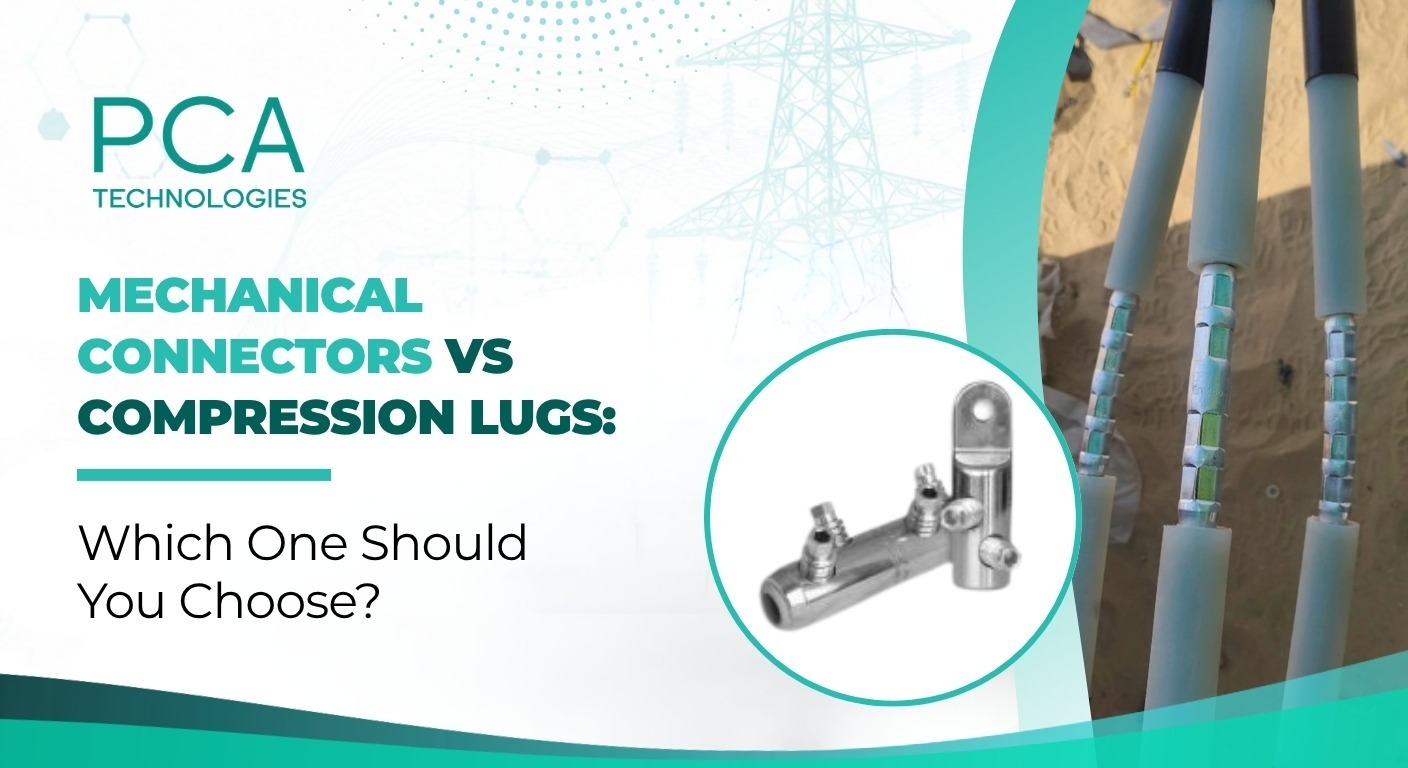
Cable connections often get less attention than joints or terminations. Yet a single lug decides whether a cable system performs safely for the next twenty years or fails within months. Engineers comparing mechanical lugs vs compression lugs need more than a spec sheet. They need a clear way to match the connector to the job.
This guide breaks down both technologies in plain terms. It covers how each works, where each performs best, and how to avoid the mistakes that cause overheating and connection failure.
A mechanical lug clamps the conductor using set screws or shear head bolts. No crimping tool is needed. The installer inserts the conductor into the barrel and tightens the bolts until they reach the correct torque. On shear head designs, the bolt head snaps off once that torque is reached.
This design removes much of the guesswork from installation. A technician with a standard wrench can complete the job without carrying hydraulic equipment.
Mechanical lugs suit situations where speed and flexibility matter more than a permanent crimp. Typical uses include:
A compression lug is crimped onto the conductor using a hydraulic tool and a matching die. The crimping process reshapes the barrel around the conductor strands, creating a solid metal to metal bond. This bond is permanent and cannot be undone without cutting the lug off.
Because the connection is formed under high pressure, contact resistance stays low. That translates into less heat build up under sustained load.
Compression technology remains the standard for planned, high current installations. It is commonly specified for:
Factor | Mechanical Lugs | Compression Lugs |
Installation tool | Wrench or torque driver | Hydraulic crimper and dies |
Installation speed | Fast | Moderate |
Field flexibility | High | Requires planning |
Electrical resistance | Good, if torque is maintained | Very low, consistent |
Vibration resistance | Moderate | High |
Best suited for | Repairs, maintenance, remote work | Planned, high load installations |
Reusability | Often reusable | Permanent, single use |
Neither option wins in every scenario. A mechanical lug installed correctly can be just as safe as a compression lug. The right answer depends on your site conditions, not on which technology sounds more advanced.
When both connectors are sized correctly, installed properly, and tested to recognised standards, both deliver reliable performance for their intended use. Compression lugs generally hold a slight edge in continuous high current applications because the crimped bond resists loosening from heat cycles. Mechanical lugs can match that performance as long as bolt torque is checked periodically, particularly in installations exposed to vibration.
The larger point engineers often miss is this: connector type matters less than installation quality. A premium compression lug crimped with the wrong die will underperform a correctly installed mechanical lug every time.
Most lug failures trace back to installation, not the product itself.
Following the manufacturer’s installation guide closes most of these gaps.
Ask these questions before specifying a connector:
Answering these honestly usually points to the right choice without much debate.
Mechanical lugs vs compression lugs is not a question of which product is universally better. It is a question of fit. Mechanical lugs offer speed and flexibility for repairs and variable site conditions. Compression lugs offer a permanent, low resistance bond for planned high current systems. The connector that performs best is the one matched correctly to the application and installed the right way.
PCA Technologies manufactures both mechanical and compression cable lugs built for low and medium voltage systems. If you are specifying connectors for an upcoming project, our technical team can help you match the right lug to your conductor size, load, and site conditions.
Mechanical lugs clamp the conductor with set screws or shear bolts and need no special tools. Compression lugs are crimped permanently using a hydraulic tool and die, creating a stronger, low resistance bond suited to high current, long term installations.
Yes, when installed correctly. Mechanical lugs perform reliably if bolt torque is maintained over time. Compression lugs offer slightly better resistance to vibration and heat cycling, making them the preferred choice for continuous high load applications.
Mechanical lugs are generally faster to install because they only require a wrench or torque driver. Compression lugs need a hydraulic crimping tool and matching die, which adds setup time but produces a permanent connection.
Yes. Mechanical lugs rated and tested for medium voltage systems are used in distribution networks, renewable energy projects, and industrial panels, provided they meet the applicable standards and project specifications.
Price alone should not drive the decision. Consider installation conditions, load requirements, and long term maintenance. A slightly higher upfront cost on compression lugs often reduces failure risk and maintenance expense over the system’s lifetime.
Contact us now by filling out the form or drop us an email. And we’ll get back to you as soon as possible.
© PCA Technologies Private Limited – 2026