
Have a query or want to arrange for sales assistance?
Contact us now by filling out the form or drop us an email. And we’ll get back to you as soon as possible.
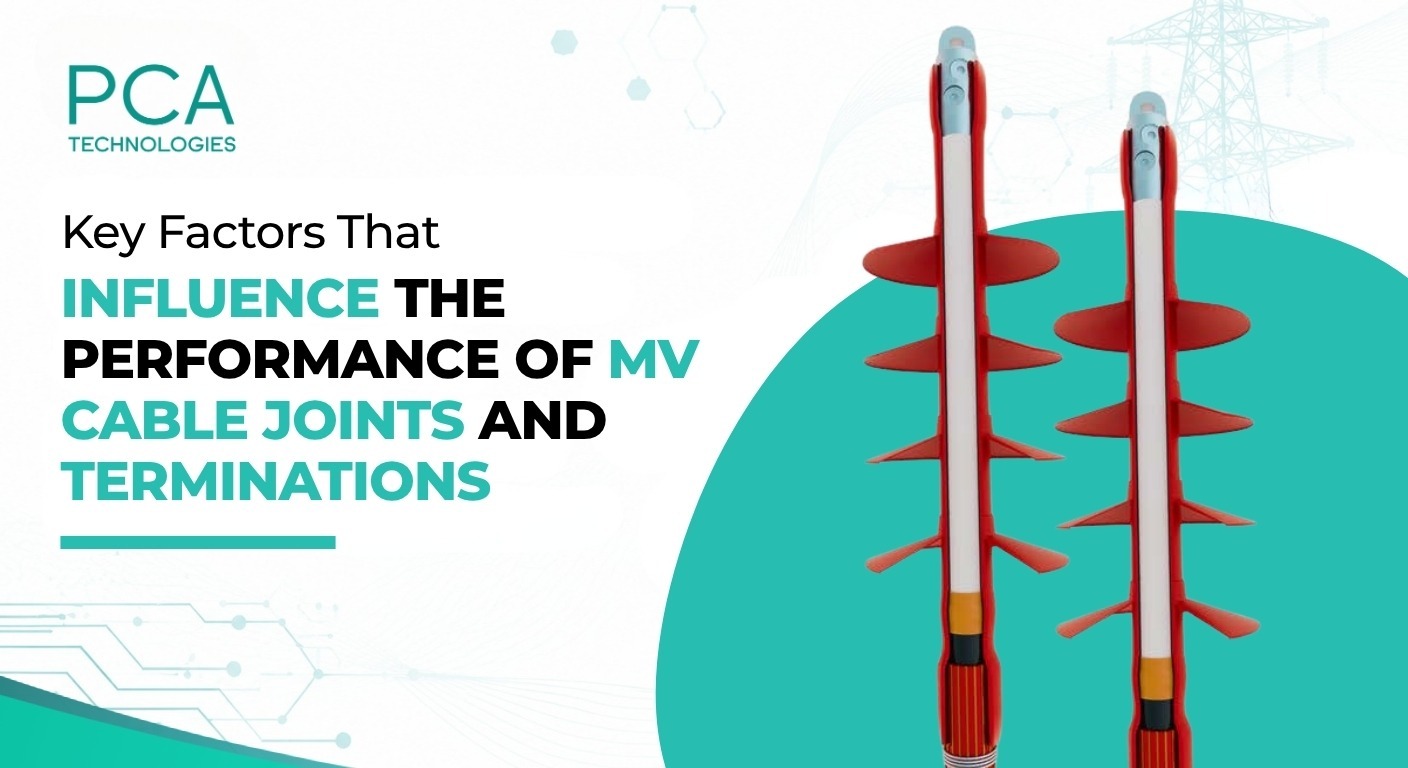
A power network is only as strong as its weakest connection point. In medium voltage systems, that weak point is often a joint or termination that was specified without enough thought given to site conditions. MV cable joints and terminations carry the full electrical and mechanical stress of the network, and even a small oversight during selection or installation can lead to costly failures years later.
This article looks at the factors that actually determine how well a joint or termination performs, so engineers and procurement teams can make better decisions before installation begins.
A cable joint connects two lengths of cable, while a termination connects a cable to equipment such as switchgear or a transformer. Both must manage electrical stress, seal out moisture, and hold up under mechanical load for decades.
Unlike the cable itself, joints and terminations are built on site. That means the quality of the final product depends heavily on the material, the design, and how carefully it is installed. This is where most performance issues begin.
Every MV cable joint or termination is designed for a specific voltage class and cable construction. Using a kit rated for the wrong voltage, insulation type, or conductor size creates weak points in the electrical field control layer. This often shows up later as partial discharge or insulation breakdown.
Before ordering cable accessories, always confirm:
The materials used inside a joint or termination directly affect long term reliability. Stress control tubes, mastics, and heat shrink components must maintain their properties across a wide temperature range and over many years of service.
Poor quality materials tend to shrink unevenly, crack under thermal cycling, or lose their insulating properties faster than expected. This is one reason why sourcing power cable accessories from a manufacturer with proven testing standards matters more than comparing price alone.
Even a well designed joint will fail if installed incorrectly. Installation errors are, by far, the most common cause of MV joint and termination failures in the field.
Common installation issues include:
Training installers properly and following the kit instructions closely reduces these risks significantly.
MV cable accessories are often installed in demanding environments, including underground vaults, outdoor substations, and coastal sites exposed to salt air. Moisture ingress, temperature swings, and ground movement all place additional stress on joints and terminations.
Selecting accessories rated for the actual site environment, not just the electrical load, helps prevent premature aging of seals and insulation.
Cables expand and contract with load changes and ambient temperature. Over years of service, this thermal cycling puts repeated mechanical stress on joints and terminations. Products with poor elastic recovery or weak adhesion between layers are more likely to develop gaps that allow moisture or air into the insulation system.
Choosing accessories designed to handle repeated thermal cycling is especially important for networks with variable load profiles, such as those supporting renewable energy or EV charging infrastructure.
Cable accessories that comply with recognised international standards have been tested for partial discharge, thermal cycling, and mechanical strength under controlled conditions. This testing gives a reasonable indication of how the product will behave in the field.
When comparing suppliers, ask for test certificates and third party validation rather than relying on marketing claims alone.
A few practical steps can meaningfully reduce failure rates across a network:
The performance of MV cable joints and terminations depends on more than the product on the shelf. Voltage compatibility, material quality, installation practice, environmental conditions, and long term thermal stress all play a role. Getting each of these right from the start is far less expensive than dealing with an unplanned outage later.
PCA Technologies designs and manufactures cable accessories, including MV cable joints and terminations, built to perform under real world site conditions. If your team is planning a new installation or reviewing an existing network for reliability issues, our technical team can help you select the right accessories for your project.
Most failures come from installation errors rather than faulty products. Incomplete semi conductive layer removal, contaminated insulation surfaces, and skipped installation steps are the leading causes of early failure in medium voltage cable accessories.
Each joint or termination is designed for a specific voltage class and cable type. Using the wrong rated kit disrupts electrical field control, which can lead to partial discharge or insulation breakdown well before the expected service life.
Underground vaults, coastal air, and temperature swings all stress joints and terminations differently. Accessories chosen for site conditions, not just load requirements, resist moisture ingress and seal degradation better over the long term.
Products tested to recognised international standards have proven performance under partial discharge, thermal cycling, and mechanical stress. Requesting test certificates from suppliers gives a clearer picture of real world reliability than price comparisons alone.
Inspection frequency depends on the network’s criticality and environment, but a visual and thermal check before energising, followed by periodic reviews, helps catch early signs of thermal cycling stress or seal degradation before failure occurs.
Contact us now by filling out the form or drop us an email. And we’ll get back to you as soon as possible.
© PCA Technologies Private Limited – 2026