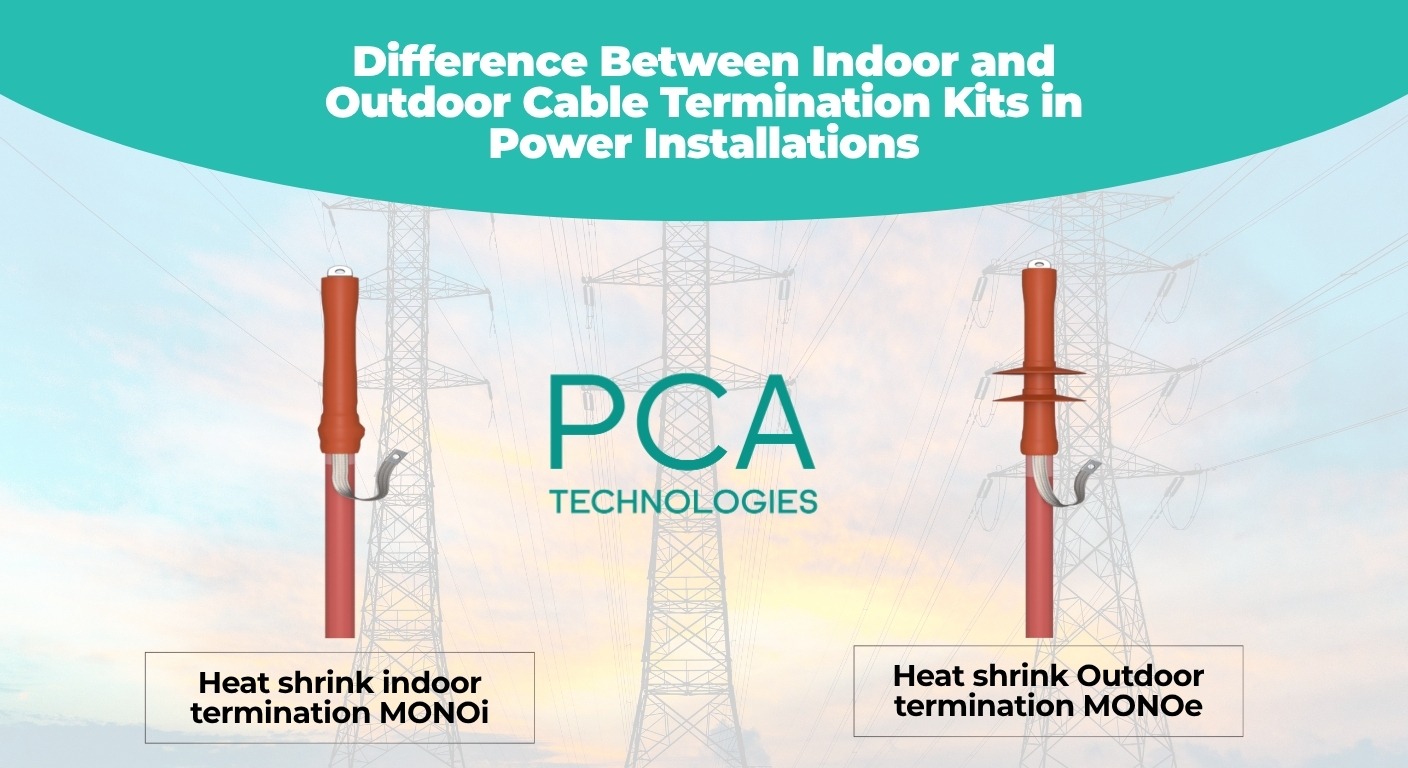
In power systems, cable termination is the final connection point where the cable is safely linked to equipment such as switchgear, transformers, panels, or overhead structures. This connection must control electrical stress, seal the cable end, and support long-term performance. That is why understanding the difference between indoor and outdoor cable termination kit options is important before selection. PCA Technologies offers both indoor termination kits and outdoor termination kits in its heat shrink cable accessories range, which shows how essential this distinction is in real installations.
What is cable termination in power installations?
Cable termination is the process of preparing and finishing the end of a power cable so it can be connected safely to electrical equipment. A proper power cable termination kit restores insulation performance, manages stress at the cable end, and protects the connection from failure. In medium voltage systems, this is a critical part of reliable operation.
What are indoor termination kits used for?
Indoor termination kits are designed for enclosed spaces where environmental conditions are controlled. They are commonly used inside substations, switchgear rooms, control panels, and transformer chambers. Since these locations are protected from direct sunlight, rain, and pollution, the kit mainly focuses on insulation, stress control, compact design, and safe cable termination within a limited space. PCA’s indoor heat shrink termination products are described for medium voltage polymeric insulated cables connected to electrical equipment.
What is an outdoor termination kit used for?
An Outdoor Termination Kit is made for exposed conditions. It is used in outdoor substations, poles, transformer yards, open switchyards, and other installations where the cable end faces sunlight, rain, dust, pollution, and changing temperatures. PCA’s outdoor heat shrink termination products are positioned as weatherproof cable connection solutions for harsh environments, which reflects the added protection needed outside.
What is the main difference between indoor and outdoor cable termination kit options?
The main difference is environmental protection. Indoor kits are built for stable internal conditions, while outdoor kits must resist weather and contamination. Outdoor versions often include weather-resistant insulation and shed-shaped profiles that help control water flow and surface leakage. Industry references also note that outdoor terminations are built to handle rainfall, outdoor sunlight, heavily polluted areas, and greater mechanical stress.
How does construction differ between the two?
Think about seed storage in agriculture. Seeds kept inside a clean storage room need proper packing, but seeds kept in an open farm shed need stronger protection from moisture and climate changes. The seed may be the same, but the storage requirement changes with the environment. Cable termination works in the same way. The cable may be similar, but the kit must suit the actual site conditions.
Why are cable jointing accessories important?
A cable joint is never just one part. It is a full system made of carefully selected accessories. If any part is missing or not installed correctly, the joint may not perform well. Cable jointing accessories help ensure the cable can handle electrical load, weather exposure, and mechanical stress over time.
A simple practical example
A simple agricultural example makes this easier to understand. When two irrigation pipes are joined on a farm, the connection must stay tight and leak-free. If the joint is weak, water escapes, and the full system suffers. A heat-shrink cable joint works in a similar way. It joins two cables securely so power can pass safely and reliably, while the outer layers protect the connection from moisture and contamination.
Why does correct selection matter?
Using the wrong kit can reduce insulation performance and increase the chance of failure over time. An indoor kit should not be used where the cable end is exposed to rain and sunlight. Likewise, an outdoor kit may be selected unnecessarily for a fully enclosed panel room where a compact indoor solution is more suitable. Engineers should check voltage class, cable type, location, pollution level, and sealing needs before choosing a power cable termination kit.
Conclusion
The difference between indoor and outdoor cable termination kit choices comes down to environment, construction, and protection level. Indoor termination kits are made for enclosed electrical spaces. Outdoor termination kit solutions are built for harsher field conditions. When the selection matches the site, cable termination becomes safer, cleaner, and more reliable in long term power installations.
Choose the right cable termination solution for every installation environment with PCA Technologies. Explore trusted indoor termination kit and outdoor termination kit options for safe, reliable, and long-lasting power cable connections.
FAQs
What is the difference between indoor and outdoor cable termination kit options?
Indoor kits are used in enclosed spaces, while outdoor kits are designed to handle rain, sunlight, dust, and changing weather conditions.
Where is an outdoor termination kit used?
It is used in open substations, poles, switchyards, transformer yards, and other exposed outdoor power installations.
Where are indoor termination kits commonly used?
They are commonly used inside substations, switchgear rooms, control panels, and other protected electrical areas.
Why is choosing the right cable termination kit important?
The right selection improves safety, supports reliable cable termination, and helps reduce the risk of failure in power systems.
Can the same power cable termination kit be used indoors and outdoors?
No. The kit should always match the installation environment to ensure proper insulation, sealing, and long-term performance.