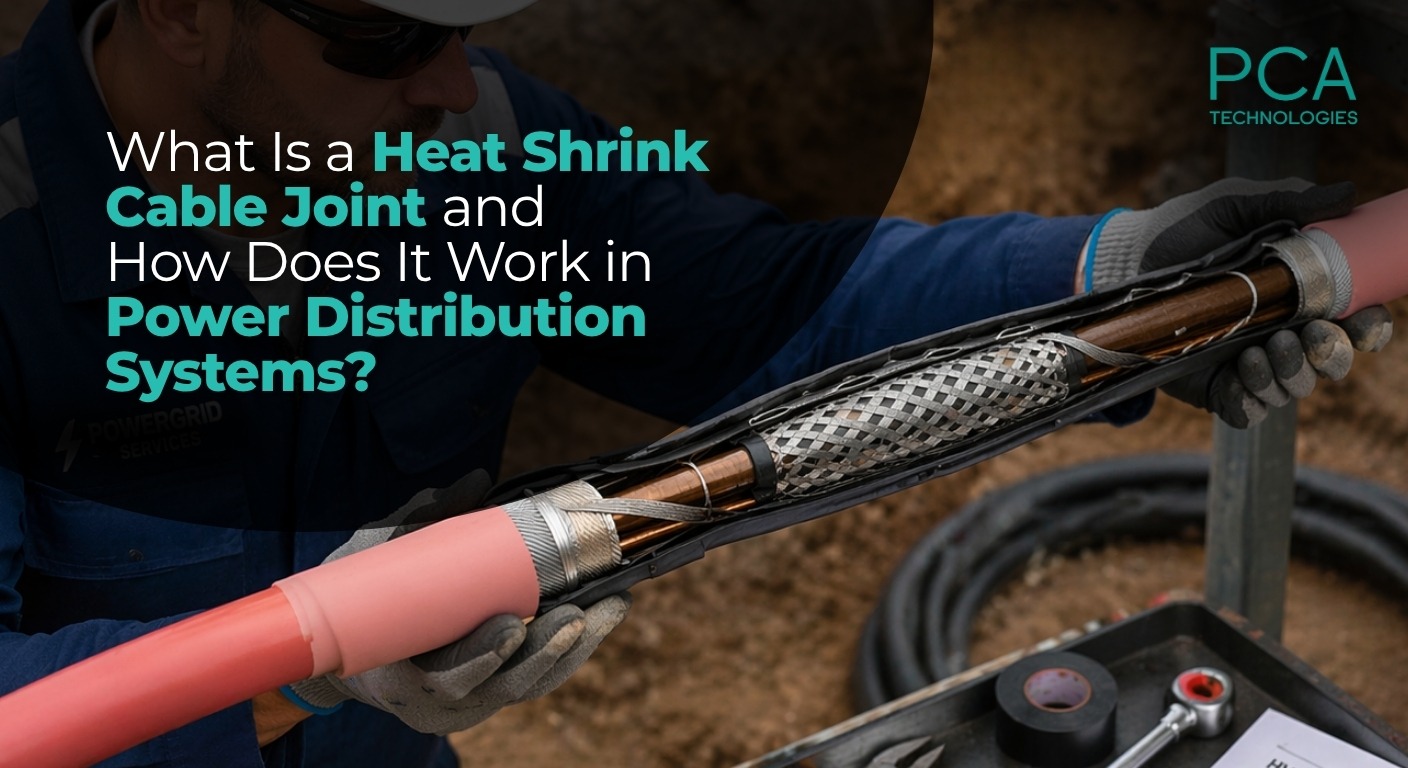
What Is a Heat Shrink Cable Joint and How Does It Work in Power Distribution Systems
Home/Heat Shrink Cable Joint/What Is a Heat Shrink Cable Joint and How Does It Work in Power Distribution Systems
Introduction
A heat-shrink cable joint is used to connect two power cables safely and restore the insulation, protection, and continuity of the original cable system. In power distribution networks, this joint helps maintain a reliable flow of electricity while protecting the connection from moisture, dust, and mechanical stress. Heat-shrink straight-through joints are commonly used in medium-voltage applications where strong insulation and long-term performance are essential. PCA Technologies offers these solutions as part of its wider range of power cable accessories.
What is a heat-shrink cable joint?
A heat-shrink cable joint is a jointing solution used to connect two cable ends and rebuild the cable structure around the connection. It is designed to restore insulation and provide sealing and protection to the joint area. This makes it an important component in power distribution systems where cable reliability matters.
How does heat-shrink technology work?
The joint uses specially designed polymer components that shrink when controlled heat is applied. These components fit tightly around the cable and the connected conductor area. Once they shrink into place, they create a compact and sealed structure. This helps protect the joint from external conditions and supports the cable’s electrical performance.
What is included in heat-shrink joint kits?
Most heat-shrink joint kits include several cable jointing accessories that work together as one system. These may include:
Integrated stress control + insulating tubes
Integrated insulating + semi-conductive tubes
Sealing mastics
Outer protective sleeves
Shear bolt connectors or ferrules
Each component has a clear purpose. Some manage electrical stress. Some restore insulation. Others help block moisture and dirt from entering the joint.
How does a cable joint kit work in practice?
The working process starts with cable preparation. The cable ends are stripped carefully so the conductor, insulation, and screen layers can be handled correctly. After that, the conductors are connected using a suitable connector. Then the different heat-shrink components are placed over the cable in sequence.
When heat is applied properly, the tubes shrink and grip the cable surface tightly. This rebuilds the insulation system and seals the joint area. The final result is a safe and durable cable connection that can perform reliably in service.
Why are heat-shrink straight-through joints used?
Heat-shrink straight-through joints are used because they offer a dependable method of joining cables in a straight line without changing the cable route or connection style. They are especially useful in medium voltage and HV cable jointing work where the joint must perform under electrical and environmental stress.
These joints are commonly used in:
Utility power networks
Industrial plants
Substations
Renewable energy systems
Underground cable installations
Their popularity comes from their sealing performance, insulation strength, and suitability for field installation.
Why are cable jointing accessories important?
A cable joint is never just one part. It is a full system made of carefully selected accessories. If any part is missing or not installed correctly, the joint may not perform well. Cable jointing accessories help ensure the cable can handle electrical load, weather exposure, and mechanical stress over time.
A simple practical example
A simple agricultural example makes this easier to understand. When two irrigation pipes are joined on a farm, the connection must stay tight and leak-free. If the joint is weak, water escapes, and the full system suffers. A heat-shrink cable joint works in a similar way. It joins two cables securely so power can pass safely and reliably, while the outer layers protect the connection from moisture and contamination.
What should engineers check before selection?
Before selecting a cable joint kit, engineers should check:
Voltage class
Cable type
Conductor size
Insulation material
Installation environment
The joint must match the cable and the service conditions exactly. Correct cable preparation and proper application of heat are also very important. Even a good product can fail if it is installed incorrectly.
Conclusion
In simple terms, a heat-shrink cable joint is a reliable method of joining power cables in distribution systems. It restores electrical performance, protects the cable connection, and supports safe long-term operation. That is why heat-shrink straight-through joints continue to be an important part of modern power cable accessories used in medium voltage and HV cable jointing work.
Looking for reliable heat-shrink straight-through joints and trusted power cable accessories for your project? Explore PCA Technologies for quality solutions designed for safe and dependable power distribution.
FAQs
What is a heat-shrink cable joint?
A heat-shrink cable joint is used to connect two power cables and restore insulation, sealing, and protection at the joint area.
Where are heat-shrink straight-through joints commonly used?
They are commonly used in medium-voltage power distribution systems, substations, industrial plants, and underground cable networks.
What do heat-shrink joint kits include?
Heat shrink joint kits usually include insulating tubes, stress control components, sealing materials, and other cable jointing accessories needed for installation.
Why is proper installation important in a cable joint kit?
Proper installation helps ensure the joint performs safely and prevents issues like moisture entry, insulation failure, or reduced cable life.
How do engineers choose the right heat shrink joint kit?
They check the voltage class, cable type, conductor size, insulation material, and installation environment before selection.